Operationalizing the 5 Kitchen Safety Rules for Busy Shifts
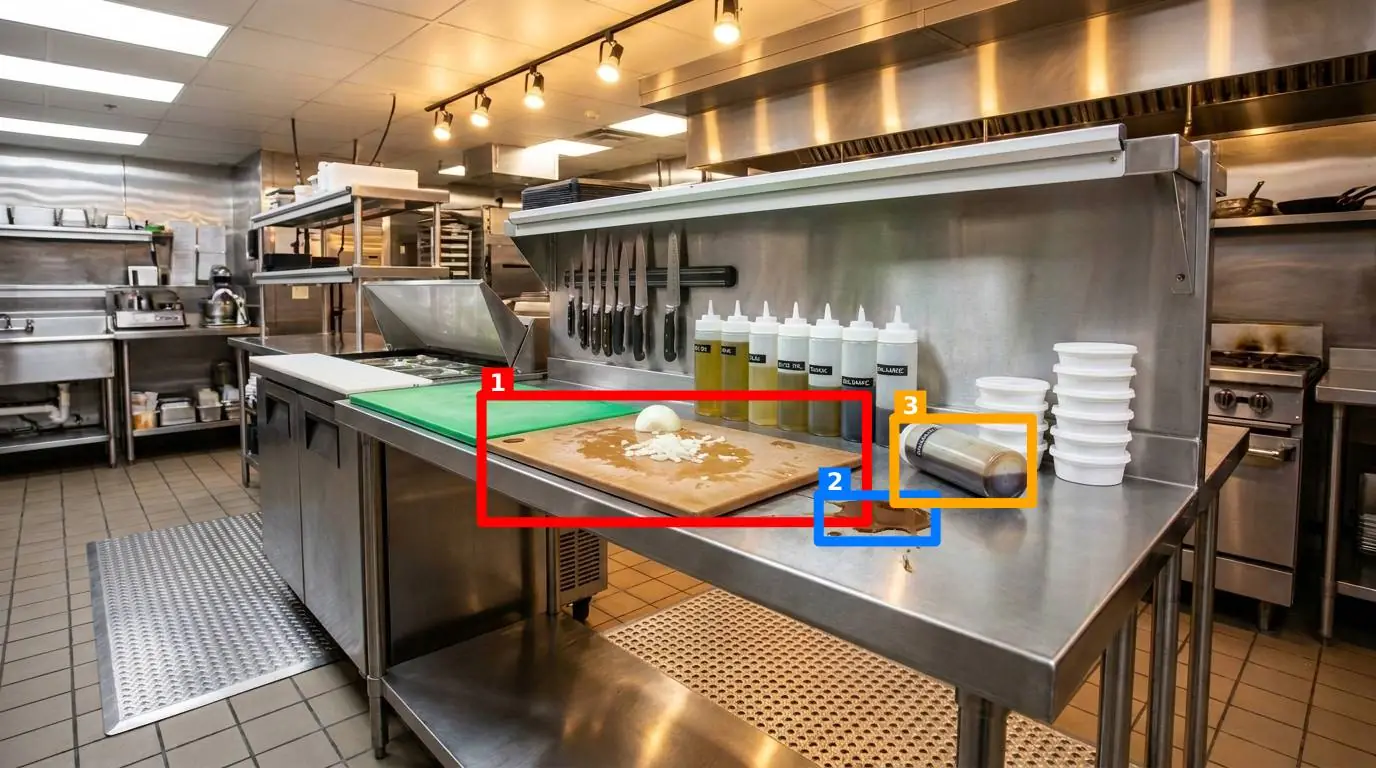
The line is three deep, the printer is screaming with orders, and a server just dropped a stack of ramekins near the pass. This is the moment where your safety standards either hold firm or evaporate. Every head chef and operations manager knows the 5 kitchen safety rules by heart, but in the heat of a Friday night rush, those rules often remain trapped on a laminated poster in the breakroom rather than being lived on the floor. The challenge isn't a lack of knowledge; it's the gap between knowing what a safe kitchen looks like and ensuring it stays that way when you aren't standing right there.
For those managing five, fifty, or five hundred sites, the traditional way of closing this gap is the walkthrough. You or your shift leads carry a clipboard or a tablet, checking off boxes. But we all know the reality of the paper trail. It is prone to pencil-whipping, where a distracted supervisor marks every station as compliant just to get the task done. A checkmark next to 'floor is clean' doesn't tell you if there is a mop bucket left in a high-traffic walkway or if the degreaser is sitting dangerously close to the prep table. To truly manage risk, you need a way to turn those abstract rules into a concrete, visual standard that can be audited in seconds without slowing down the line.
Implementing the 5 Kitchen Safety Rules: From Policy to Practice
To move from a policy-heavy manual to a high-performance kitchen, you have to break down the 5 kitchen safety rules into specific, visible control points. A control point isn't just a general area; it is a specific station, a shelf, or a doorway that must meet a defined standard at all times. When you define these points visually, you remove the ambiguity that leads to accidents. Let's look at how to apply this to the core pillars of kitchen safety.
1. Preventing Cross-Contamination
Cross-contamination is the silent killer in food service. Your policy might state that raw poultry must be stored below ready-to-eat foods, but a busy prep cook might tuck a tray of chicken wherever it fits during a delivery. A visual standard for your walk-in cooler defines exactly what each shelf should hold. A reference photo shows the bottom shelf reserved for poultry, the middle for beef and pork, and the top for produce and sauces. By auditing this specific station visually, you can immediately see if the orientation or position of items has shifted. If the red cutting board is being used for onions instead of the green one, that is a visible failure of the standard that requires immediate correction.
2. Controlling Temperature and Time
Foodborne illness thrives in the danger zone. While digital probes are standard, the environment around the food matters just as much. Is the line cooler lid being left open during the rush? Is the thermometer in the reach-in visible and reading correctly? A visual audit of the prep line can confirm that lids are down and that secondary thermometers are in their designated spots. When you have multiple sites, you cannot be there to see if a cooling log is being updated in real-time or if it was filled out at the end of the shift. Visual evidence of the cooling station—showing the ice bath levels and the placement of the logs—provides a level of accountability that a simple checkmark cannot match.
3. Enforcing Strict Personal Hygiene
The handwashing station is the most important six square feet in your building. Yet, it is frequently the most abused. We have all walked into a kitchen to find a handwash sink filled with soaking ladles or a stack of side towels. A visual standard for this station requires more than just a 'clean' sink. It requires the presence of soap, a stocked paper towel dispenser, and a completely clear basin. If a worker can photograph the station and have it compared against a reference photo of a perfectly stocked sink, the habit of using that sink for anything other than hands is broken quickly. This is about presence and cleanliness: if the soap is missing, the standard is failed.
4. Managing Chemicals and Sanitation
Chemicals like degreasers, sanitizers, and floor cleaners are necessary but hazardous. The rule is simple: never store chemicals above or near food. In practice, a spray bottle of Quat sanitizer often ends up on the prep table next to the tomatoes. A visual audit of the chemical storage area and the individual prep stations ensures that bottles are in their designated brackets and that the sanitizer buckets are stored on the floor or a dedicated low shelf. You are looking for the presence of required items (the test strips) and the absence of clutter (discarded rags) around the chemical station.
5. Mitigating Physical and Fire Hazards
The back-of-house is a minefield of physical risks. Grease buildup in filters can lead to hood fires, and boxes stacked in front of an exit door can be fatal in an emergency. These are often the easiest hazards to spot but the hardest to maintain. A visual audit of the hood vents can identify grease saturation before it becomes a fire risk. Similarly, a dedicated control point for the fire exit ensures that the 'no-go' zone is always clear. If a delivery driver leaves a pallet of flour in front of that door, a quick photo will flag the clutter immediately, allowing the manager to clear the path before the shift begins.
The Transition from Checklists to Visual Standards
The problem with flaws in traditional food safety checklists is that they rely on the auditor's subjective judgment. One person's 'clean' is another person's 'greasy.' By moving to a visual standard, you provide an objective 'truth' for the kitchen. This is where SnapAudit changes the dynamic of the floor walk. Instead of a long list of questions, the manager defines control points and takes a single reference photo of how that station should look when it is perfect. This becomes the 'North Star' for that site.
When a worker or a shift lead performs a round, they don't need to install a complex app. They simply open the site in their phone browser, select the station, and take a photo. The AI then compares the live photo against your reference photo. It looks for five specific criteria: presence of required items, cleanliness, clutter, position, and orientation. Within seconds, the worker receives a score out of 100 and a photo with colored boxes drawn around the problems. If a fire door is propped open, the AI boxes it. If a sanitizer bottle is missing from its bracket, the AI flags the absence. This provides the worker with instant, actionable feedback without the manager having to say a word.
| Audit Category | Visual Control Point | Common Non-Compliance Flagged |
|---|---|---|
| Cross-Contamination | Walk-in Protein Shelving | Raw poultry stored above cooked meats |
| Hygiene | Handwash Station | Dishes in sink or empty soap dispenser |
| Chemical Safety | Sanitation Bucket Station | Chemicals stored on food-contact surfaces |
| Physical Safety | Fire Exit Path | Boxes or equipment blocking egress |
| Fire Prevention | Exhaust Hood Filters | Excessive grease buildup or missing filters |
Maintaining Accountability Across Multiple Sites
For an operations manager, the real power lies in the data that comes from these visual rounds. When you are managing restaurant kitchen standards across dozens of locations, you need to know which sites are slipping before a health inspector arrives. Results of these visual audits can be delivered via email or Telegram to anyone on the notification list, including regional directors who might not even have an account in the system. This ensures that the right people are alerted to critical failures in real-time.
A common concern with digital tools is the 'ghost audit'—the practice of a worker taking a photo of a clean kitchen on Monday and submitting it every day for the rest of the week. To prevent this, the system checks the image metadata for photo freshness. If the timestamp on the image doesn't match the current time, the submission is rejected. This forces the worker to actually stand in front of the station, ensuring that the 5 kitchen safety rules are being checked in reality, not just on a screen.
Over time, this data builds a history for every control point. You can use a Pareto view to see which problems recur most frequently. If 'Clutter in Fire Exit' is the top issue across 80% of your sites, you know you have a systemic storage problem or a delivery scheduling issue that needs to be addressed at the corporate level. This is far more valuable than a stack of paper checklists that all claim everything is perfect. For more on how this fits into your operational budget, you can view our pricing.
How to Get Started Tomorrow
You don't need to overhaul your entire operation in a single day. The best way to implement a visual standard is to start small and focus on the areas of highest risk. If you are struggling with managing kitchen rules, follow these steps to begin the transition:
- Identify your 'Hot Zones': Choose three areas where safety lapses are most common. Usually, this is the walk-in cooler, the dish pit, and the main prep line.
- Define the 'Perfect State': Clean the station, organize the items exactly how they should be, and take a clear reference photo. This is your gold standard.
- Set Up a Round: Group these points into a single walkthrough. This ensures that a worker can cover the entire kitchen in under five minutes.
- Empower the Team: Show the staff how to use the visual inspection software through their browser. Explain that the AI isn't there to 'catch' them, but to provide an objective score that helps them keep the kitchen safe.
- Review the Pareto: At the end of the week, look at the recurring boxes. Use that data to coach your team on the specific rules they are struggling to maintain.
By using SnapAudit, the feedback is instant, and the evidence is undeniable. When a worker sees a red box around a tray of raw beef that was placed on the vegetable shelf, they understand the error in a way that a verbal correction can never match. You are building a culture where the standard is the standard, regardless of who is on shift or how busy the line gets. Safety isn't about the poster; it's about what you can see, measure, and correct in the moment.